





Design Evolution
In the late 1950s, drawing on his experience in the automotive industry and his work on the Mini motor car, Dr Alex Moulton set out to design an improved bicycle. His ideas led to the launch of the F-frame Moulton in 1962, a radical departure from convention that achieved both critical acclaim and commercial success.
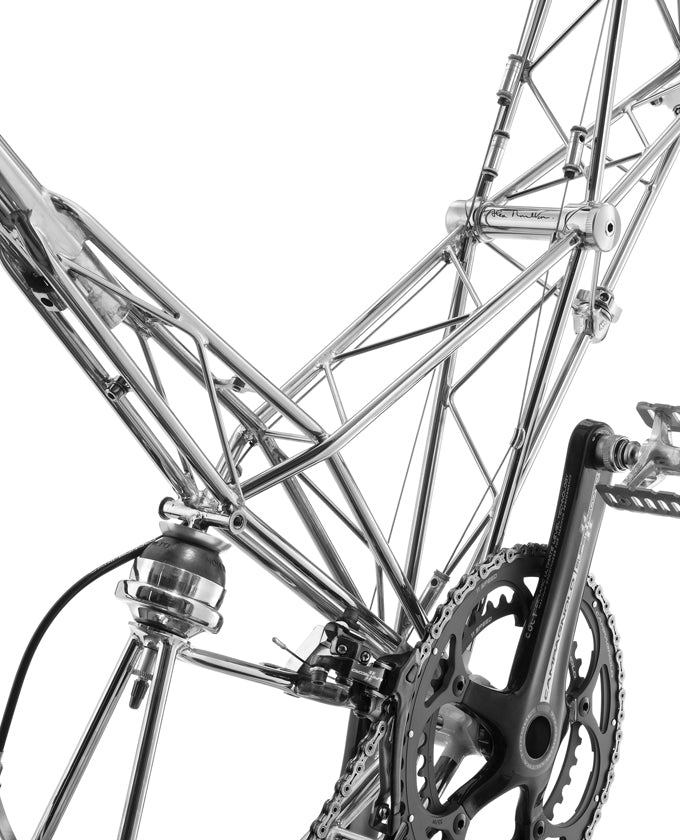
From the early 1980s, Dr Moulton moved away from mass production to concentrate on small-scale, high-quality manufacture with the introduction of the space-frame Moulton. Developed to extend his original design principles, these bicycles offered improved comfort and handling and went on to demonstrate exceptional capability, including achievements in long-distance racing, record-breaking speed, off-road innovation and world touring.
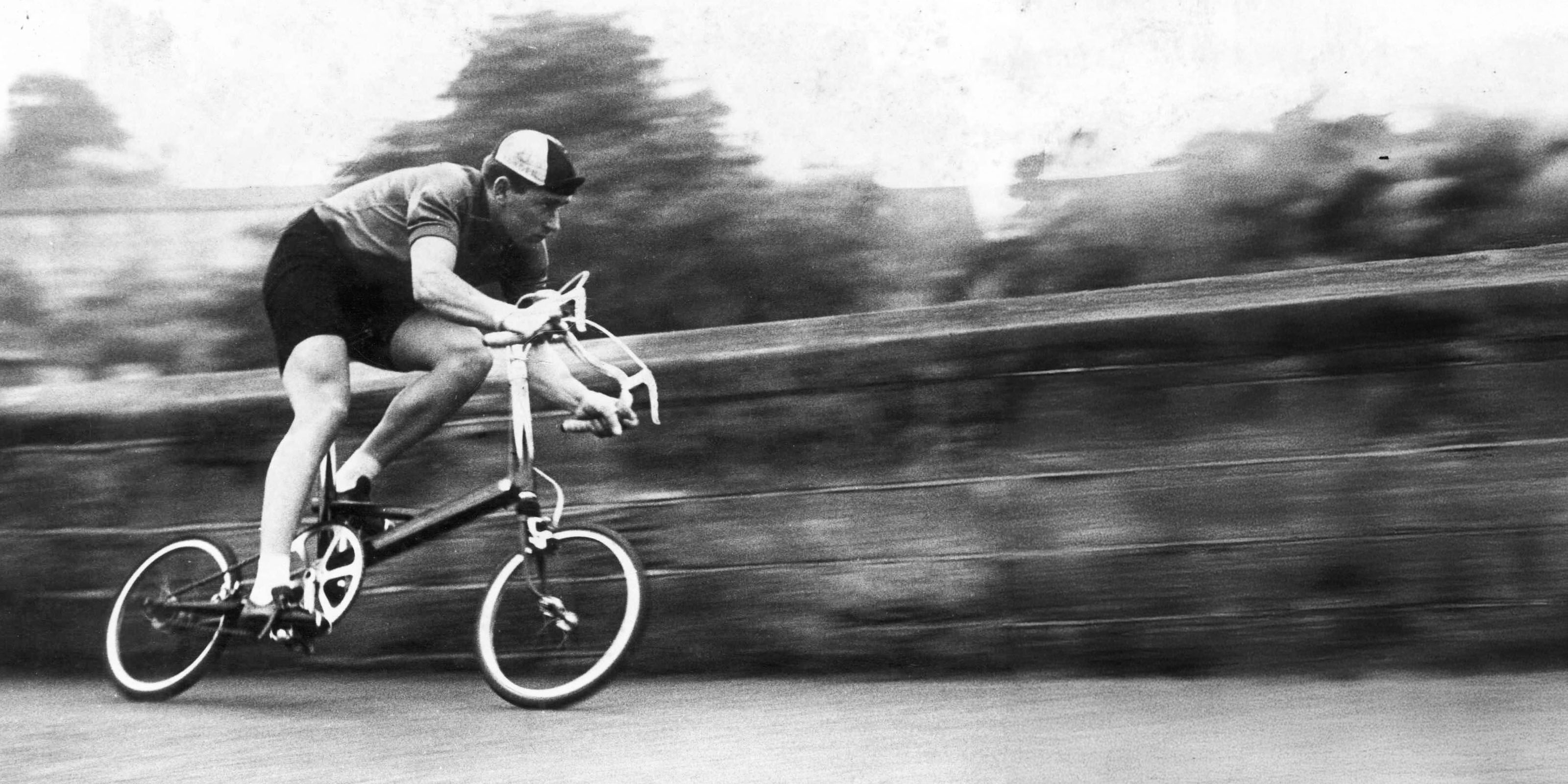
F FRAME
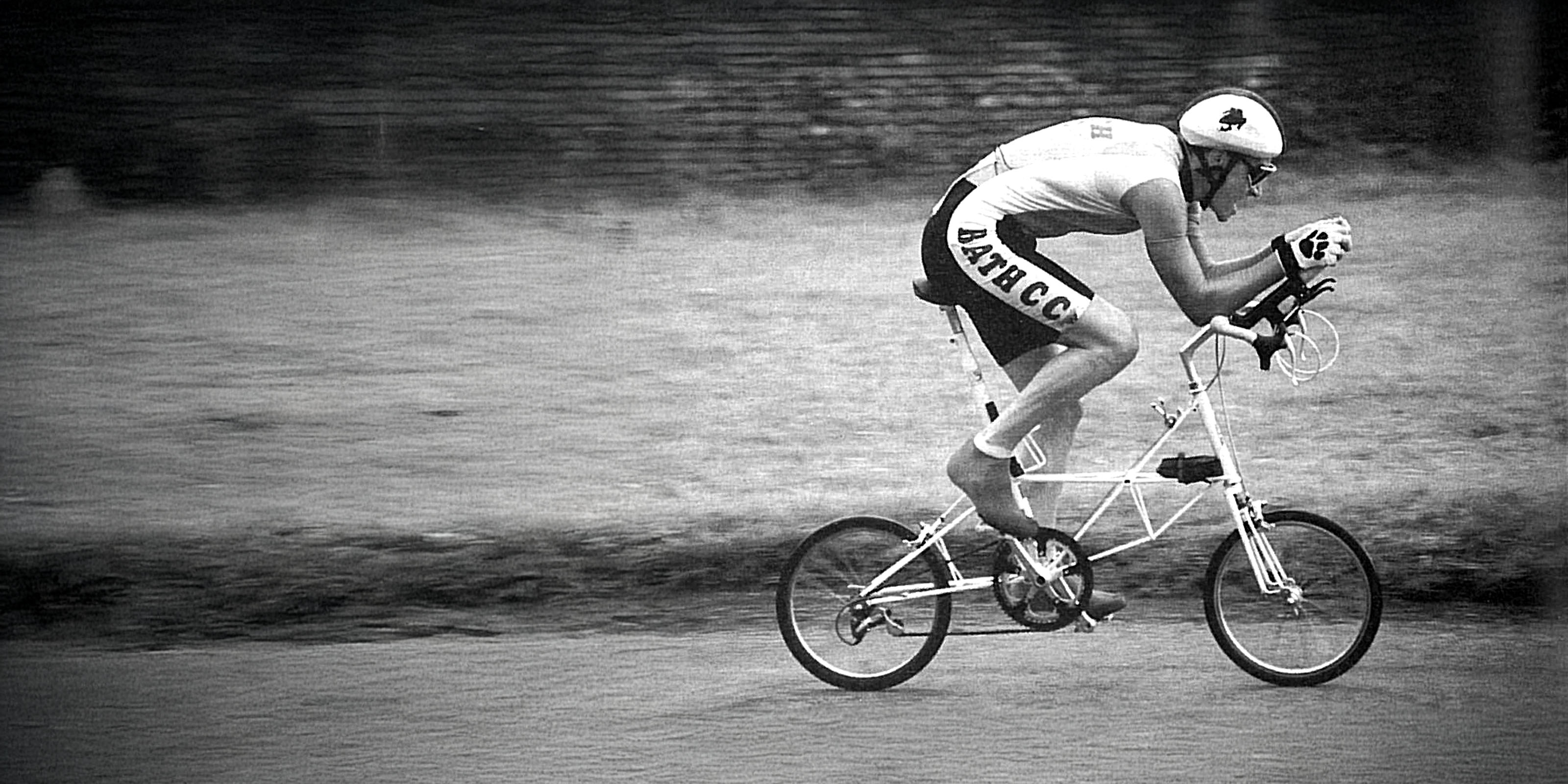
SPACEFRAME
Innovation and Early Success
The 1960s saw the bold launch of the Moulton bicycle, redefining cycle design through innovative engineering.
1960s
Innovation and Early Success
The 1960s saw the bold launch of the Moulton bicycle, redefining cycle design through innovative engineering.
1960s
The Launch
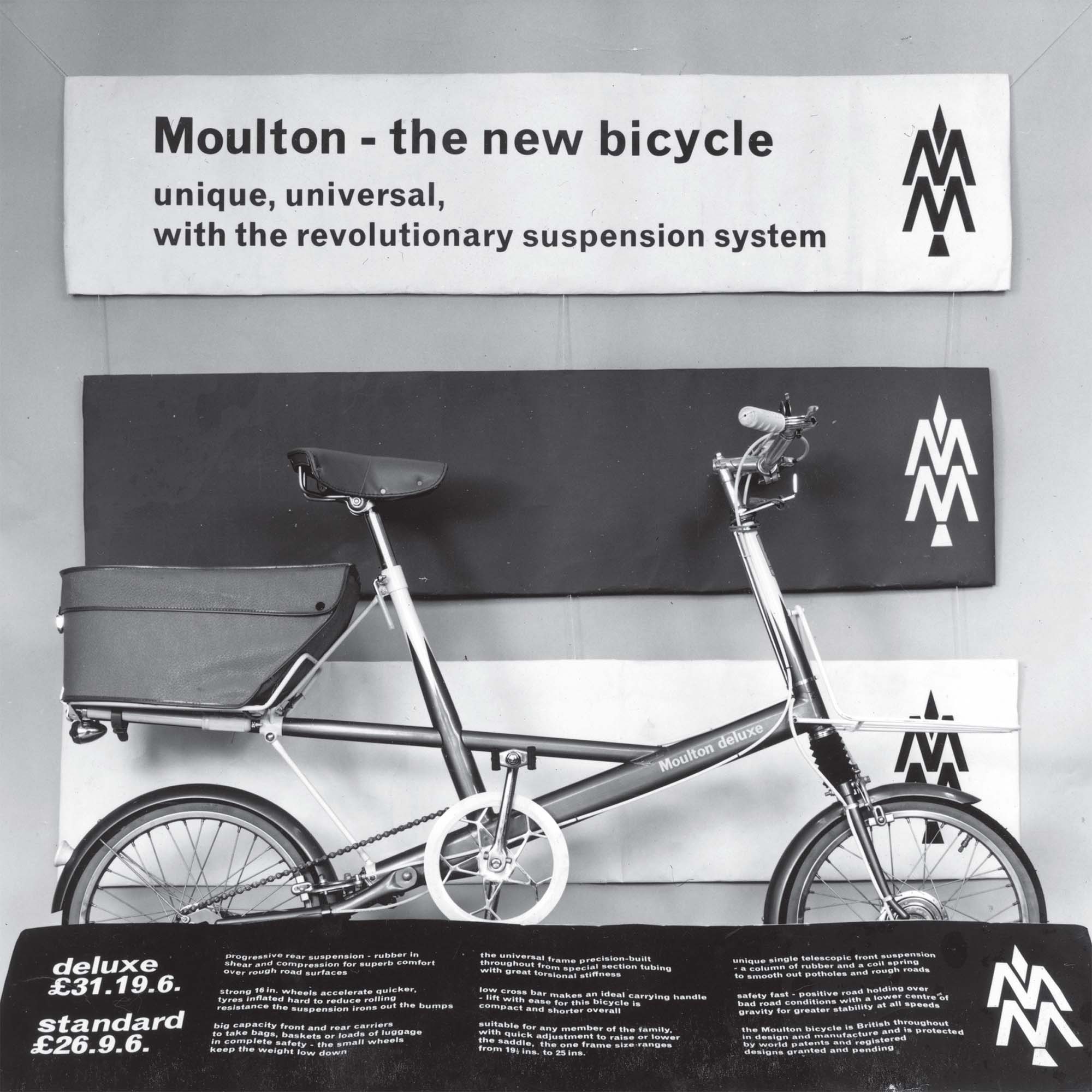
The original Moulton Bicycle was launched in 1962 at the Earls Court Cycle Show, as a revolutionary fresh take on the classic bicycle. It soon became an icon of the swinging 60s seen as a fashionable mini-bike to go with mini-skirts and mini cars. Alex Moulton had originally interested Raleigh in manufacturing the Moulton bicycle, but after negotiations broke down he formed Moulton Bicycles Ltd and started building a bicycle factory in Bradford-on-Avon. Reaction to the new bicycle was so positive that Alex immediately ordered the factory to be doubled in size, but even this proved to be woefully inadequate to meet demand and a manufacturing operation was established at Fisher & Ludlow, a subsidiary of the British Motor Corporation. Within a year, Moulton Bicycles became the second-largest frame builder in the country (after Raleigh).
'S' for Special
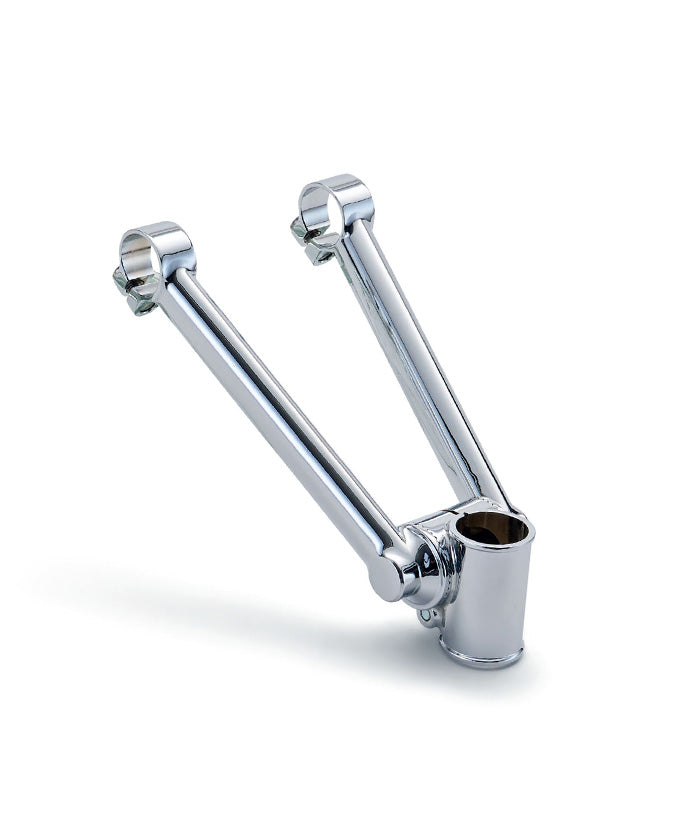
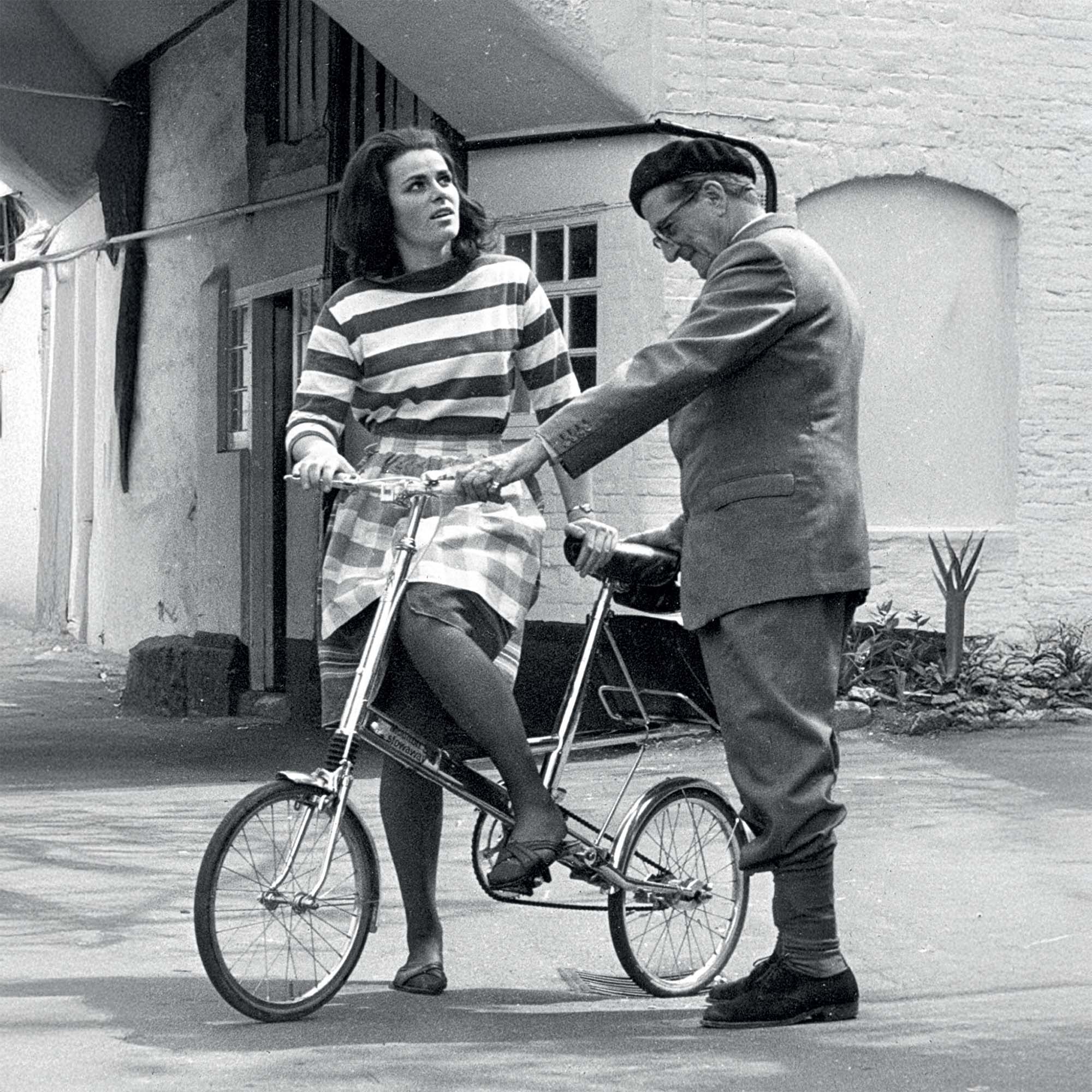
The Moulton 'S' Stowaway (MS5) was one of the more intriguing products of Alex Moulton’s early 1960s experimentation, produced in very small numbers between roughly 1962 and 1967. While the BMC factory at Kirkby were busy turning out standard Moultons for mass sale, the workshops in Bradford-on-Avon were quietly building something far more exclusive. The S Stowaway belonged to the low-volume, high-specification ‘S’ range, assembled separately from mainstream production and aimed at riders who wanted innovation and refinement rather than affordability. Designed to fold or break down for travel, the Stowaway embodied Moulton’s obsession with practicality without compromise, and the S Stowaway it is often remembered for its striking chromed frame finish, which set it apart visually from regular production models.
Raleigh's answer to Moulton
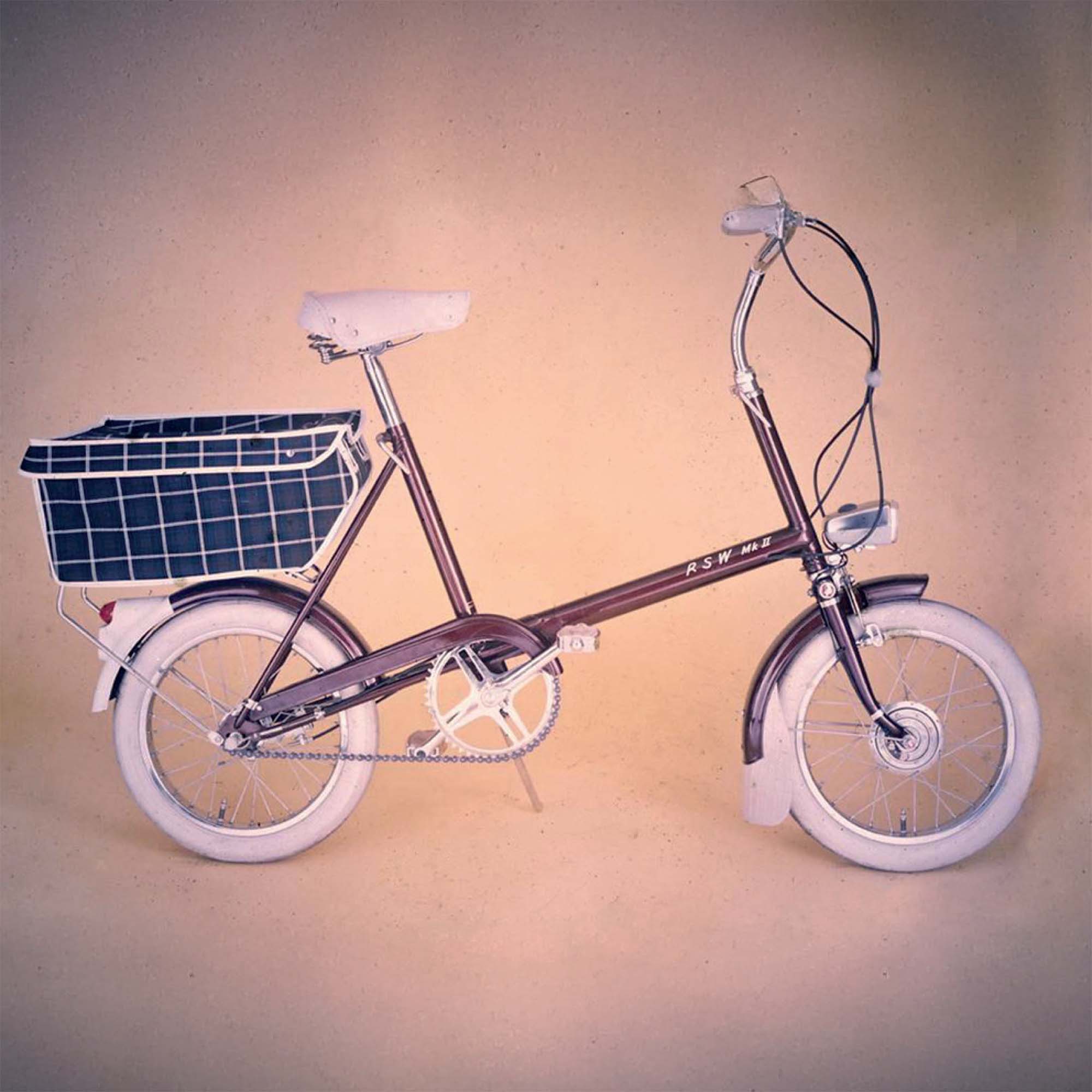
1965 Having seen the roaring success of the Moulton bicycle, other manufacturers were keen to grab a slice of the market with their own small wheeled cycles. Although many features of the Moulton bicycle were protected by patents, other cycle companies devised designs that, whilst having a similar appearance, were wholly inferior in performance and comfort. The most significant of these was the Raleigh RSW16 which, with its low-pressure balloon tyres, looked comfortable but was hard work to pedal. Even today, small-wheeled cycles are tarnished by the memory of the atrocious performance of the RSW16 and similar bicycles.
Racing Evolution
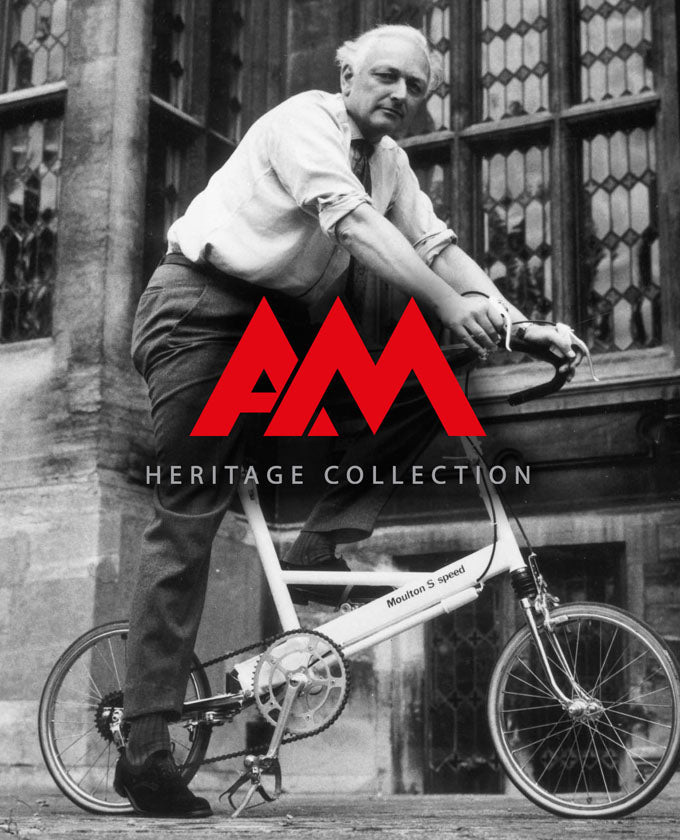
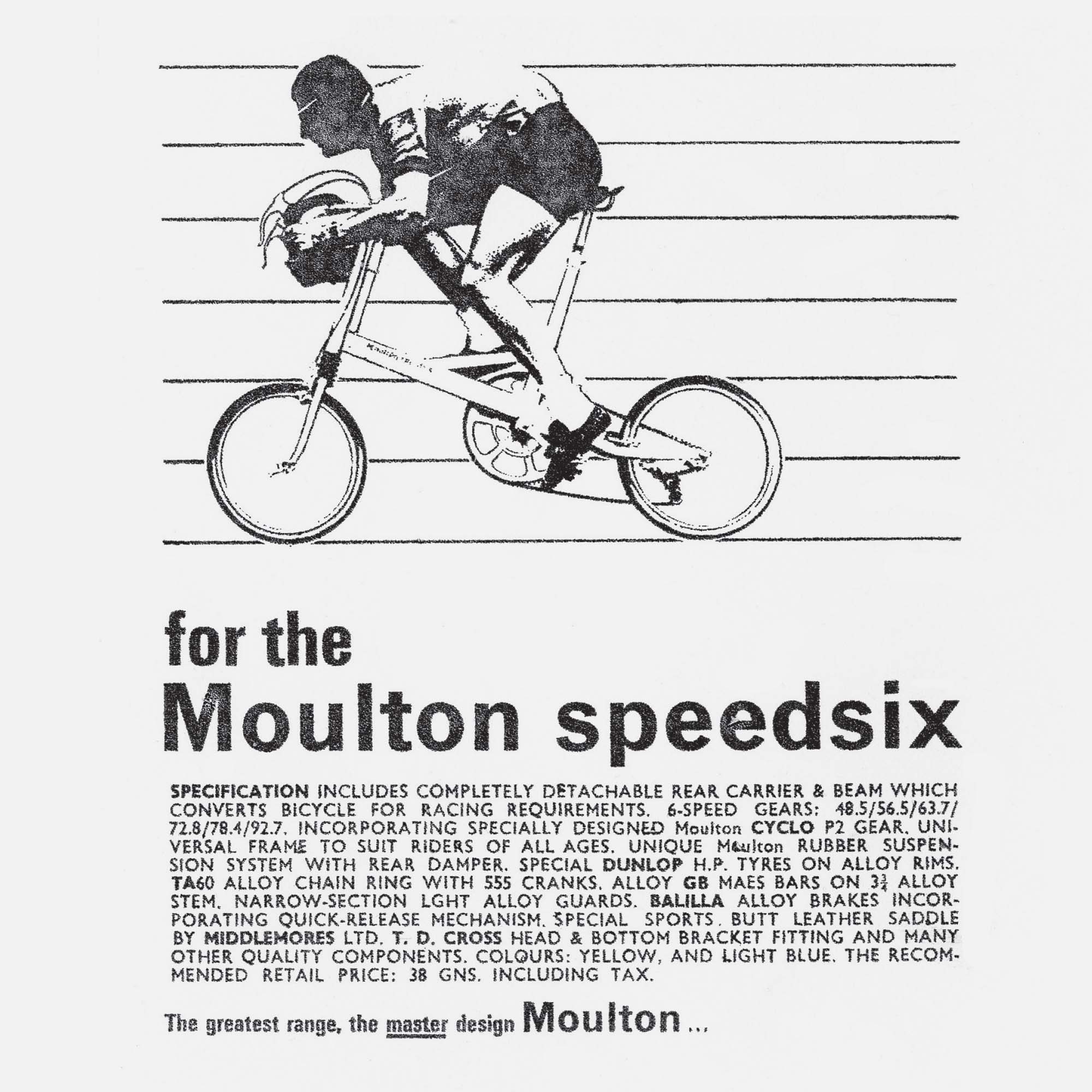
Alex Moulton sought to improve the reputation and popularity of the small-wheeled bicycle within ‘club cyclist’ circles and responded by launching the Moulton Speedsix — a uniquely versatile racing and touring bicycle fitted with a six-speed derailleur gear. Previously, all Moulton bicycles had used internal hub gears, making the Speedsix the first mass-produced bicycle of any type to feature a six-speed derailleur. Shortly afterwards, in 1966, the Moulton S Speed followed: a true racing bicycle with double chainrings, a short wheelbase, and a Reynolds 531 lightweight tubeset.
Moulton x Raleigh
As competition in the small-wheeled bicycle market intensified, and Alex Moulton was increasingly involved in the automotive industry, in 1967 the decision was taken to accept an offer from Raleigh to buy the Moulton bicycle business. Alex Moulton retained an active role as a consultant within Raleigh but, whilst the combination of Raleigh's manufacturing expertise and Moulton's innovative design appeared to be excellent news for both parties and the Moulton bicycle, it remained an uneasy alliance.
Raleigh & Experimentation
The 1970s brought major change, culminating in the development of the revolutionary Moulton spaceframe.
1970s
Raleigh & Experimentation
The 1970s brought major change, culminating in the development of the revolutionary Moulton spaceframe.
1970s
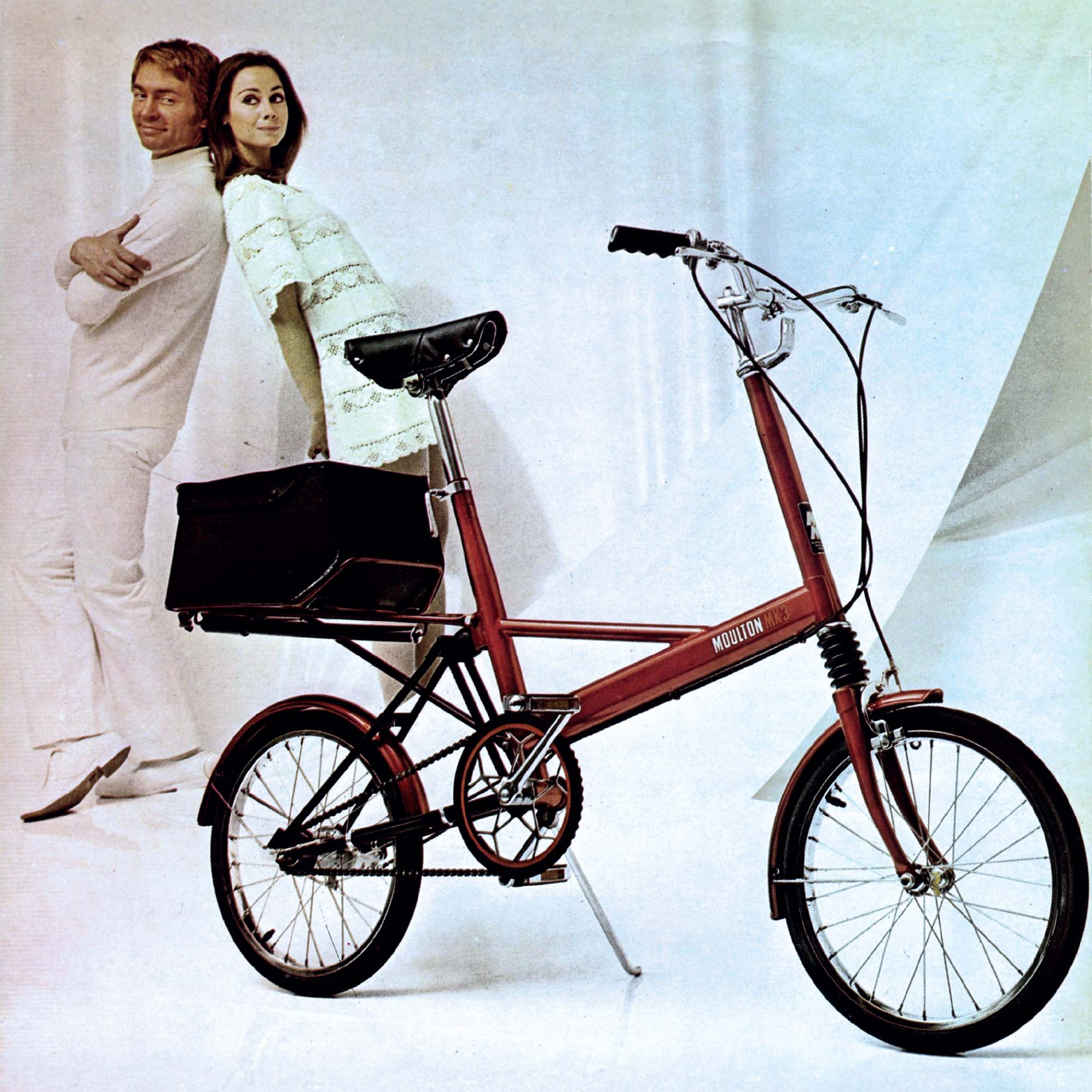
Moulton MKIII
Following Raleigh’s purchase of the Moulton bicycle business in 1967, Alex Moulton remained involved as a consultant while Raleigh took responsibility for manufacturing. This allowed Alex to focus on further developing the Moulton design. The result was a revised ‘F’ frame with a triangulated rear fork, introduced in 1970 as the Moulton MkIII after a series of high-performance prototypes, including Colin Martin’s England-to-Australia Moulton Marathon ride. Although Raleigh’s ‘Chopper’, launched at the same time, attracted much of the attention, the MkIII marked an important step in the evolution of the Moulton bicycle. Production continued until 1974, when Raleigh concluded the programme and the initial collaboration between Raleigh and Moulton came to a close. Despite its relatively short production life, the MkIII represented a significant stage in the continuing development of the innovative Moulton bicycle.
An era of redesign
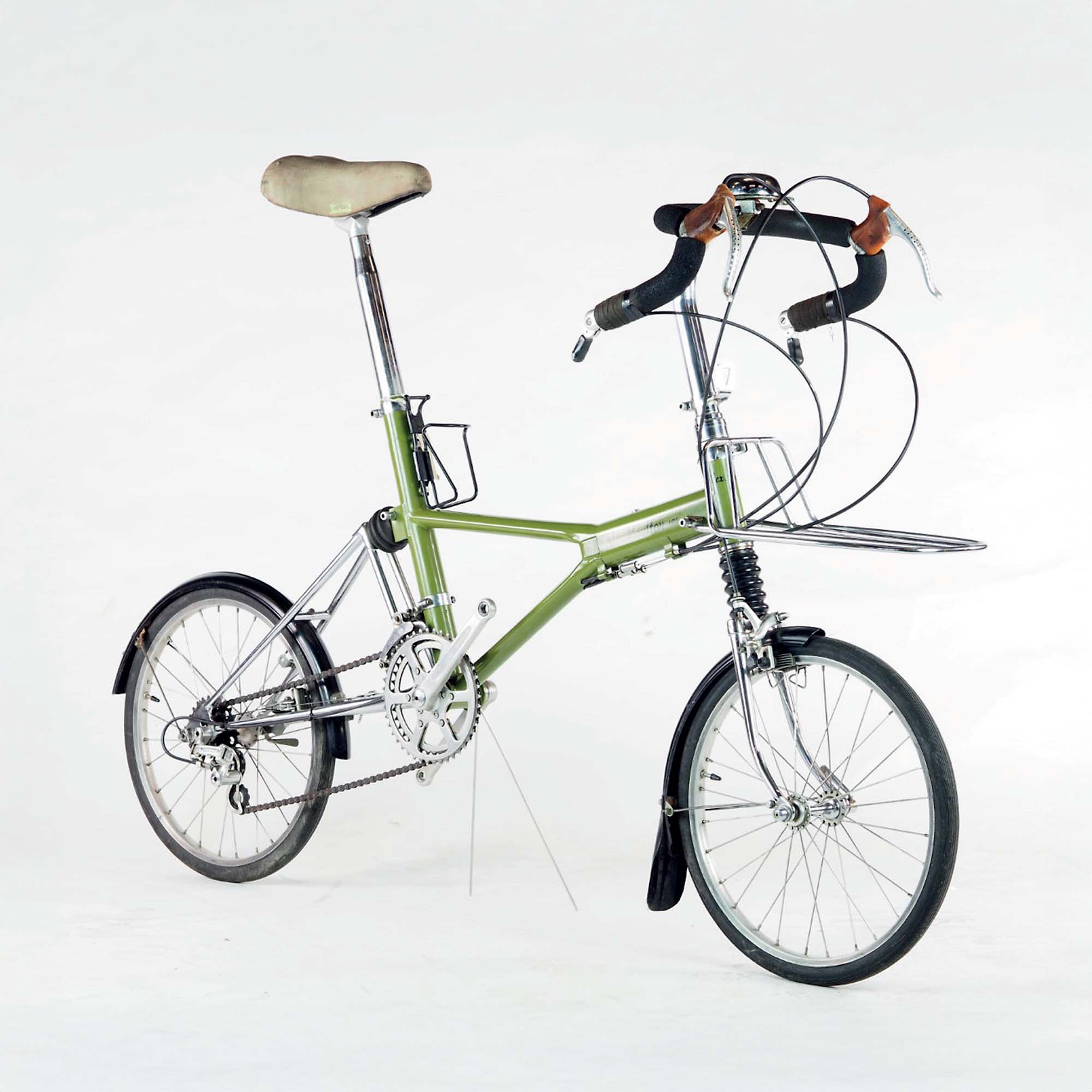
Alex Moulton continued develop the bicycle, this time with a shift in emphasis from mass-production to high quality hand built performance machines. With his innovative 'Y' frame (witness how common this frame configuration has become for mountain bikes) model nearly completed, a casual remark by a friend about the apparent weight of the 'Y' frame led to a complete re-think. In 1977 Alex conceptualised the spaceframe Moulton - which reconciled the seemingly unsolvable demands of the open, stiff frame and the need for lightness - and the iconic architecture of the Moulton bicycle, hitherto following a progressive, evolutionary path, changed forever.
The Next Generation
The 1980s saw the spaceframe Moulton reach maturity, achieving critical acclaim through advances in touring, performance, aerodynamics and off-road design.
1980s
The Next Generation
The 1980s saw the spaceframe Moulton reach maturity, achieving critical acclaim through advances in touring, performance, aerodynamics and off-road design.
1980s
The Spaceframe launches
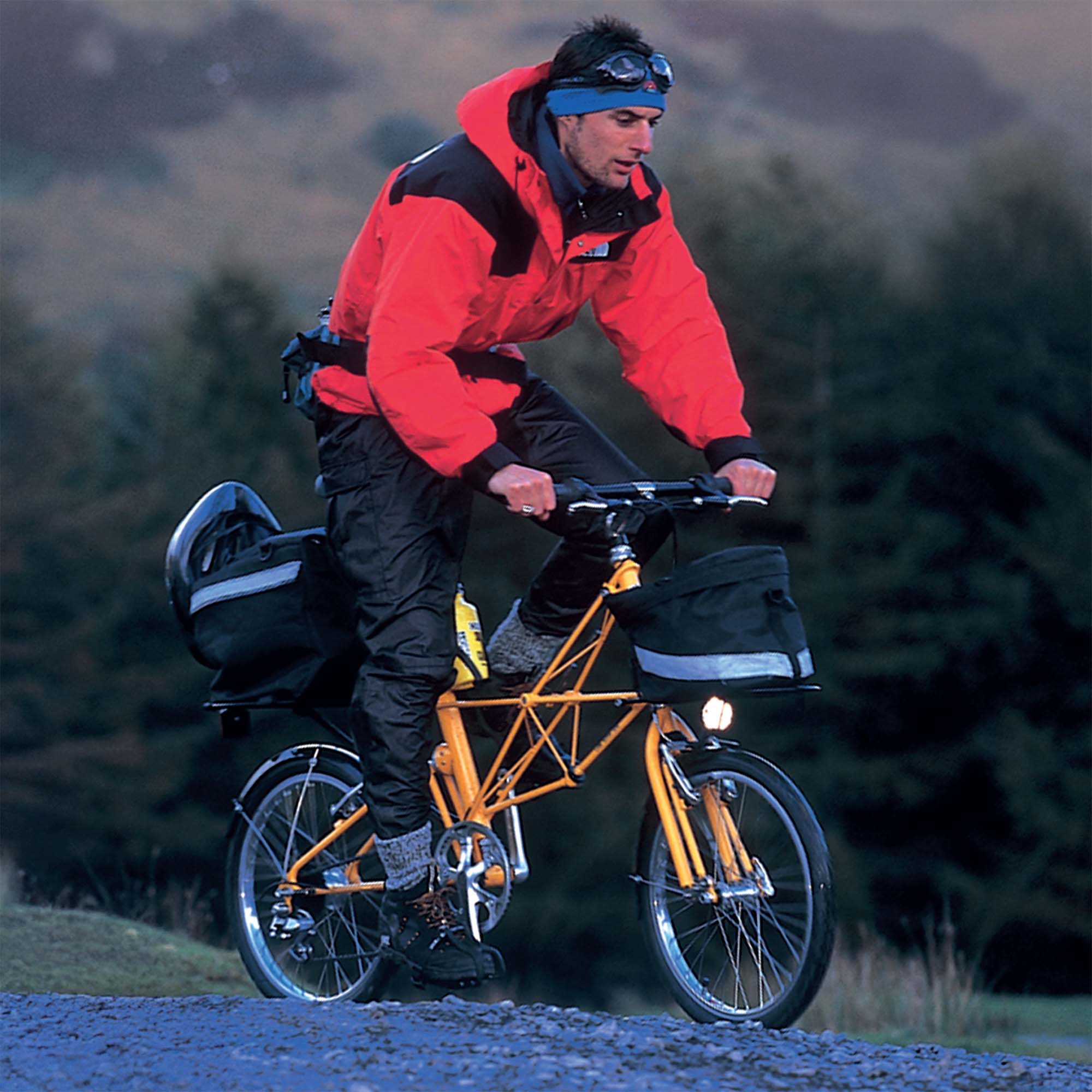
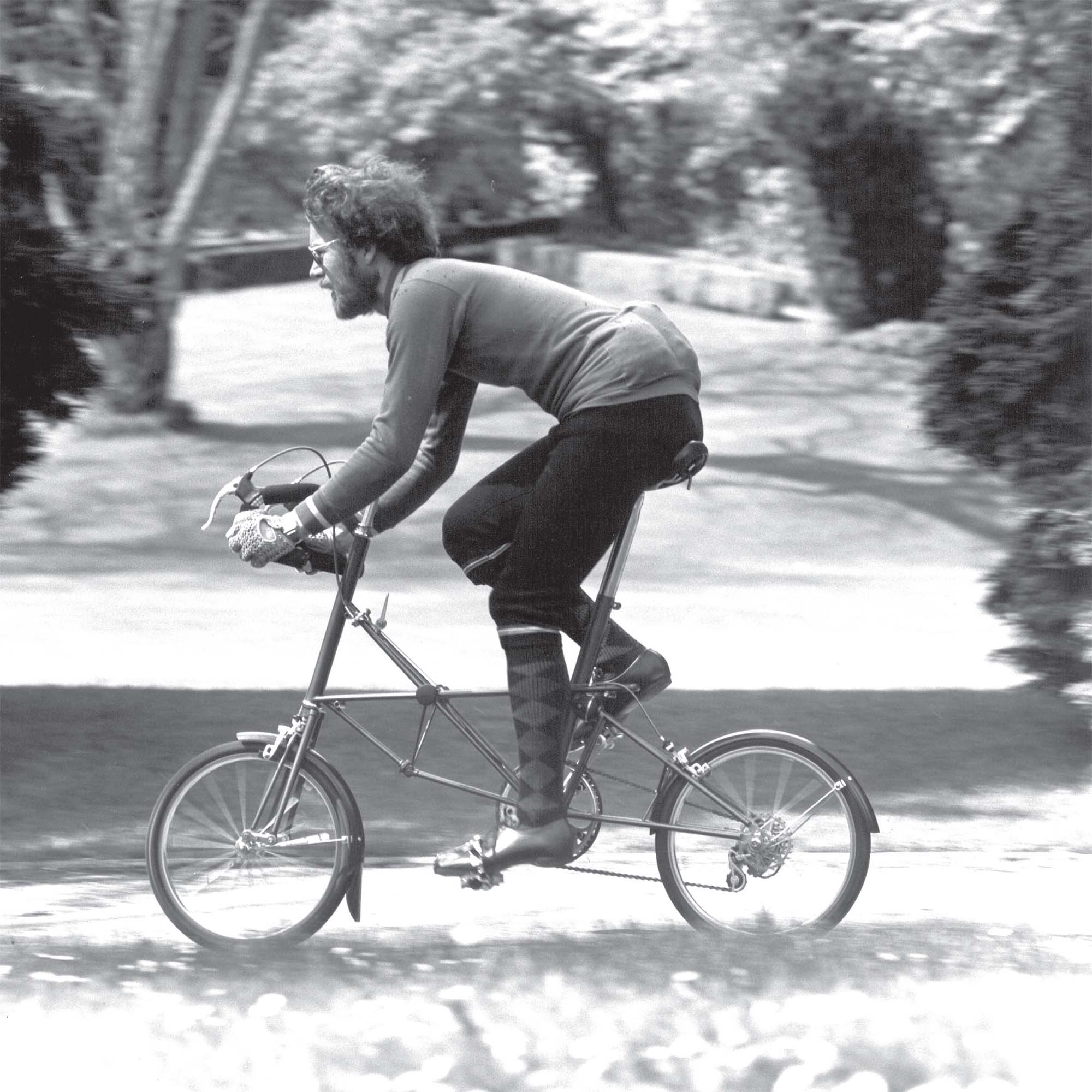
By 1979, the new spaceframe bicycle had reached a definitive stage, and production plans were put in place. The original bicycle factory was re-equipped and, following exhaustive testing, the 'Alex Moulton' ('AM') bicycle was launched to immediate acclaim in 1983. The AM7 gained great respect from the cycle touring community as a superb touring machine.
Pushing Performance
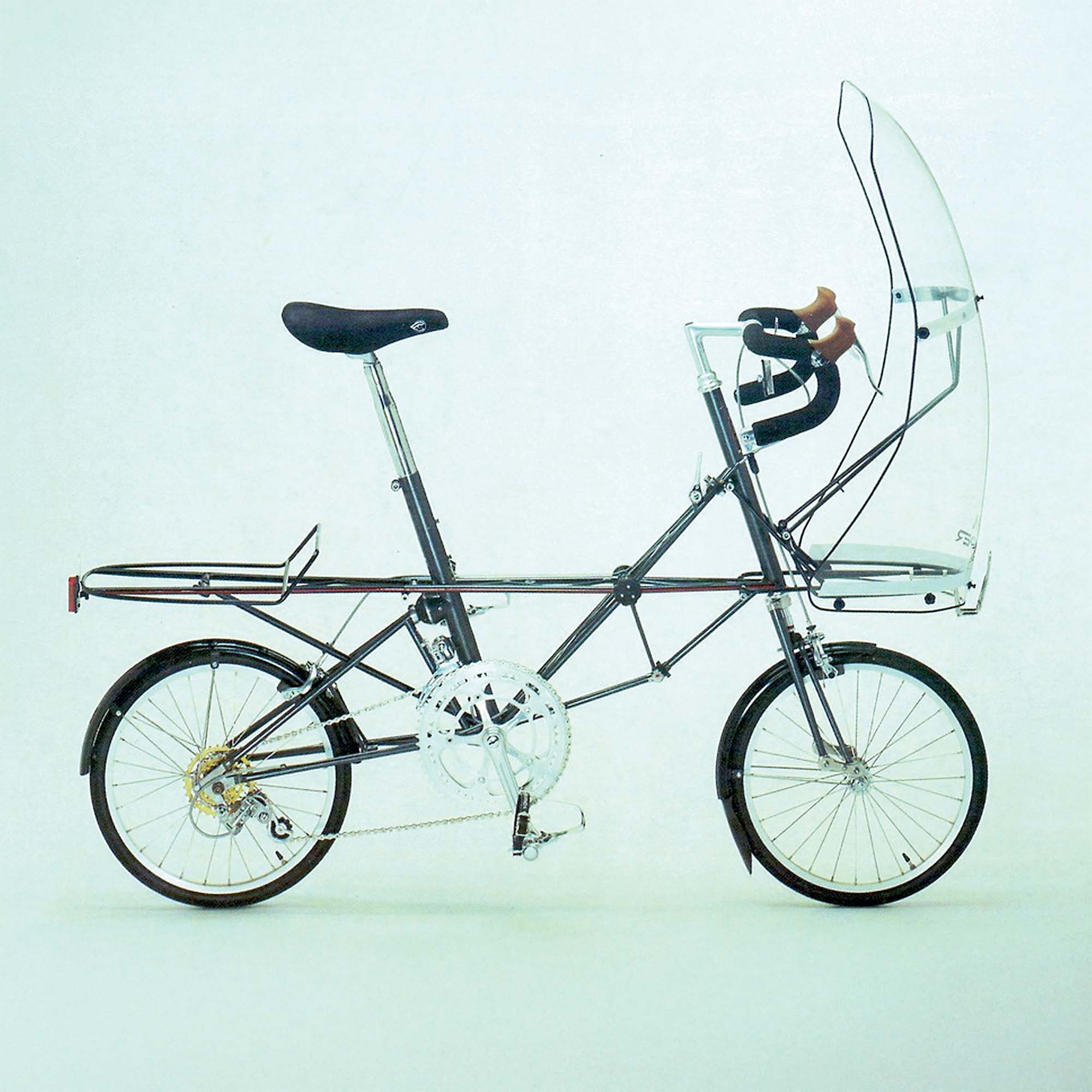
1985 saw an increasing emphasis on performance - in a similar fashion to the record breaking feats of the original 'F' frame Moulton, Alex sought to prove the performance advantages of the Moulton bicycle concept. A clear lexan fairing by Zzip Designs became available as a factory option and further work with aerodynamicist Doug Milliken resulted in a fully faired AM bicycle. In 1986 Jim Glover rode this bicycle at 51mph on a flying 200 metre course to set a world speed record that stands to this day.
Full-suspension MTB
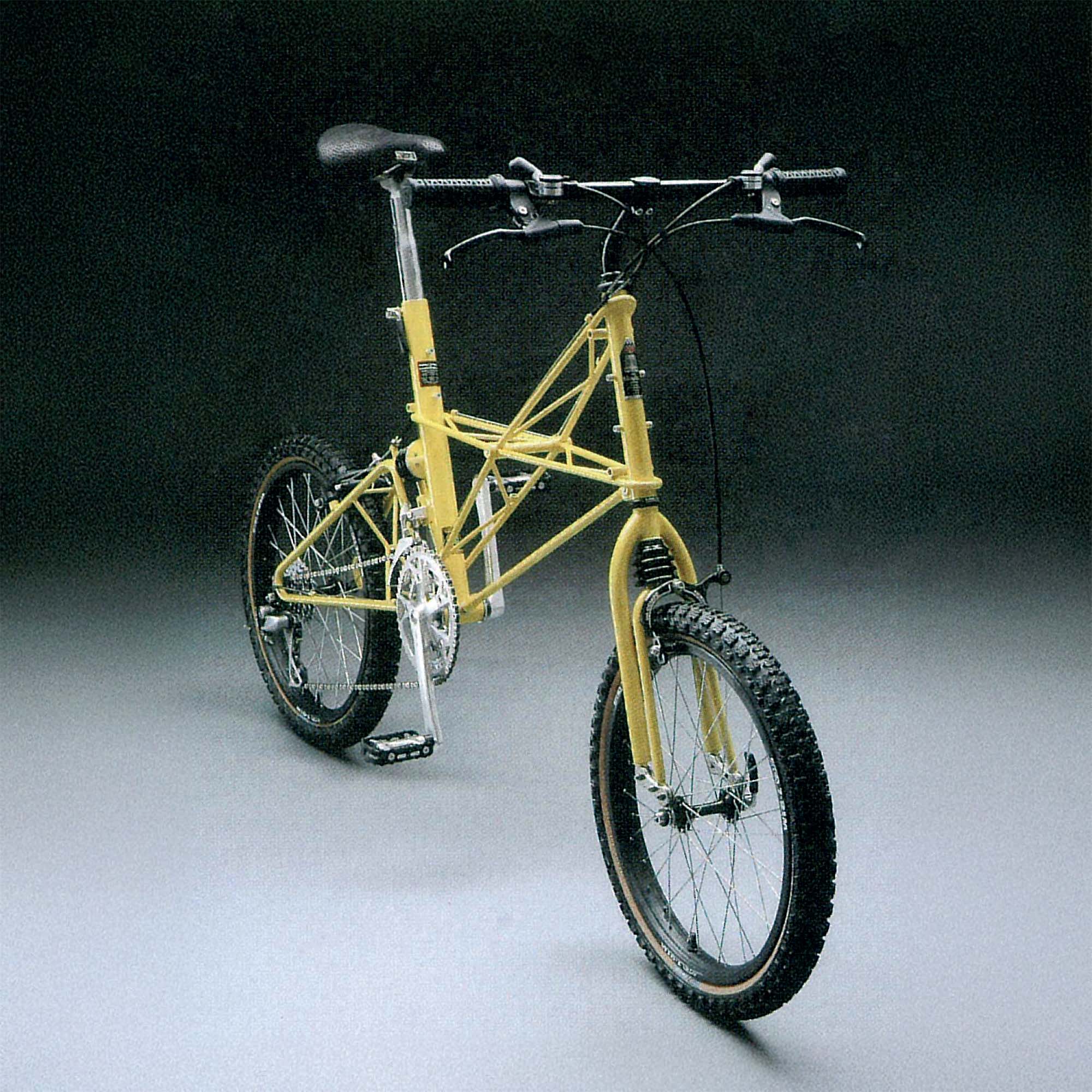
1987 saw the 25th anniversary of the Moulton bicycle and the introduction of the innovative 'Wishbone' adjustable handlebar stem on the AM 'Jubilee' model. Another sideways step in evolution took place in 1988, with the AM-ATB off road bicycle. Based upon a rationalised AM spaceframe design with 20" wheels, and credited as the first full-suspension mountain bike, the AM-ATB found favour in North America as the mountain bike boom took off.
The need for SPEED
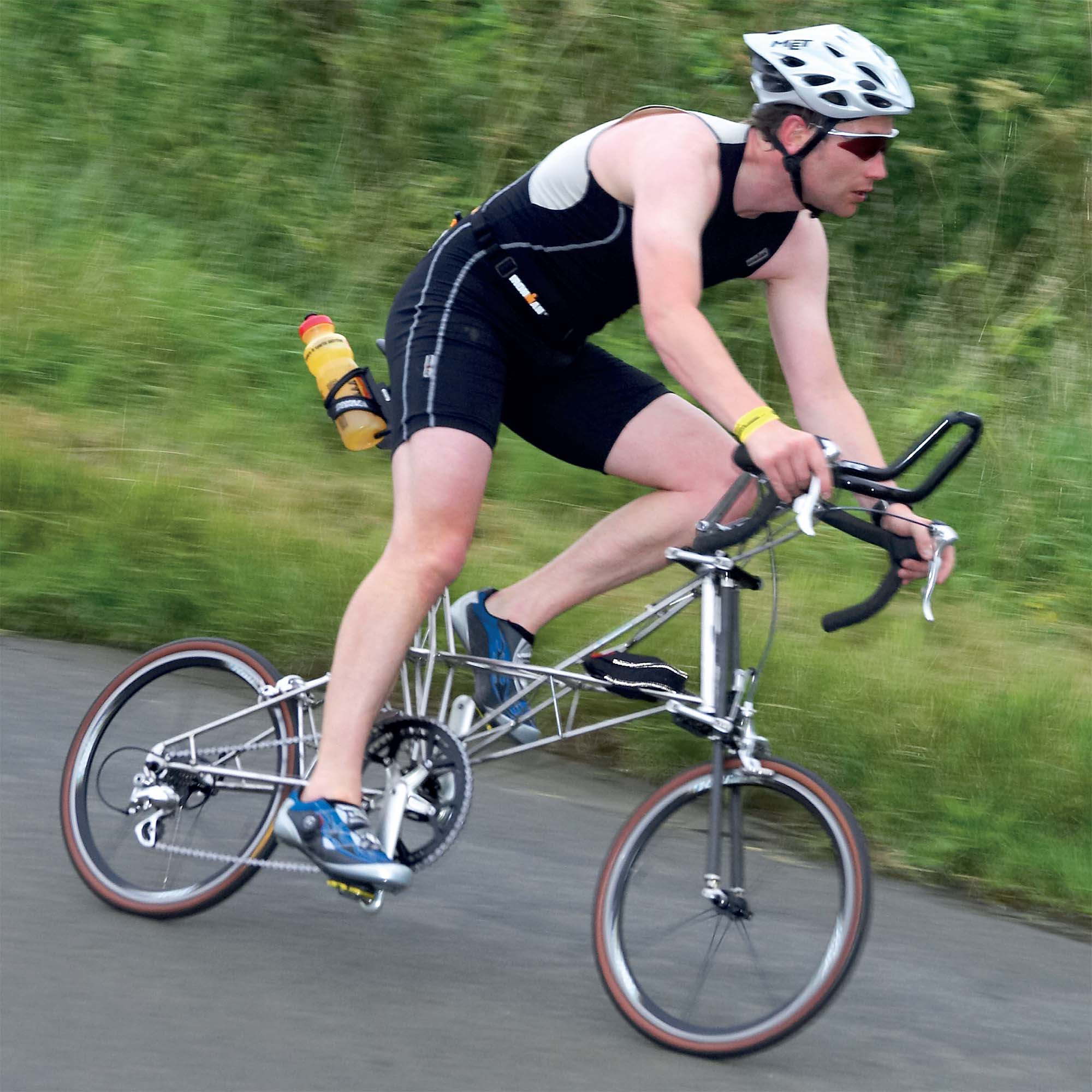
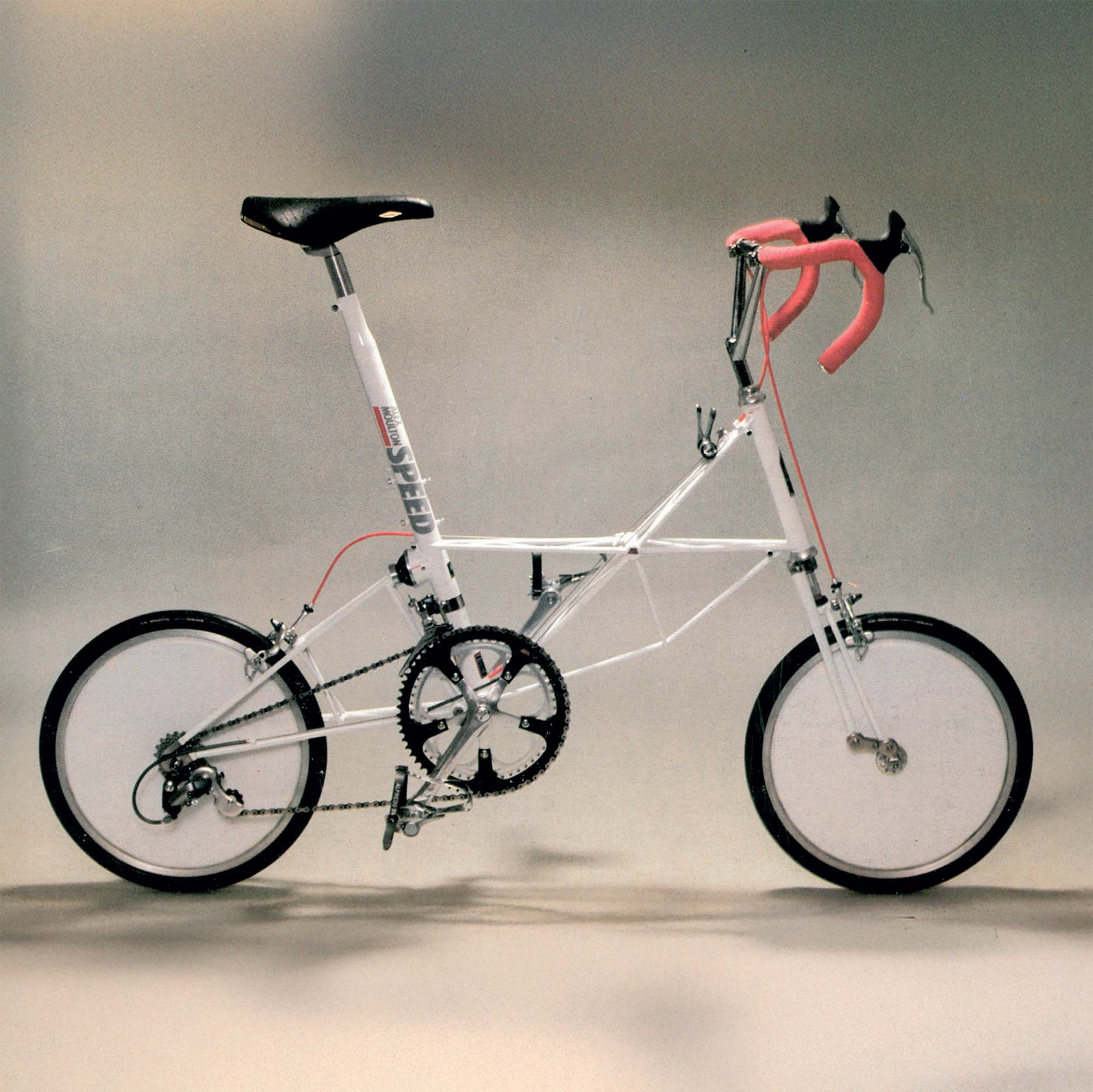
In 1989, following the success of AM rider Dave Bogdan in the Race Across America, the AM-SPEED was launched at the annual meet of the Moulton Bicycle Club in Sept 1989. A non-separable racing version of the AM bicycle, the AM SPEED was the lightest production Moulton yet.
Moultons for the masses
The 1990s saw the Moulton range expand from the affordable, all-purpose APB to increasingly refined 'New Series' performance designs.
1990s
Moultons for the masses
The 1990s saw the Moulton range expand from the affordable, all-purpose APB to increasingly refined 'New Series' performance designs.
1990s
The All-Purpose-Bike
1992 saw another significant development with the introduction of the Moulton APB (All Purpose Bicycle), manufactured under licence by Pashley Cycles in Stratford-upon-Avon. The APB, developed from the AM-ATB, was, as it name suggested, for the rider in city, town or country; on good roads or bad. By utilising a simplified frame design and streamlined manufacturing techniques all the advantages of the Moulton system became available at a lower price.
A New Series
In 1998, fifteen years after the introduction of the AM space frame, the New Series Moulton was launched which was equipped with a radical new suspension system and benefited from further weight-saving making a faster and more comfortable performance machine. Whilst sharing the architecture of the now legendary AM series, the flexitor and hydrolastic suspension systems of the NS offer increased refinement and improved ride comfort.
Bridgestone X Moulton
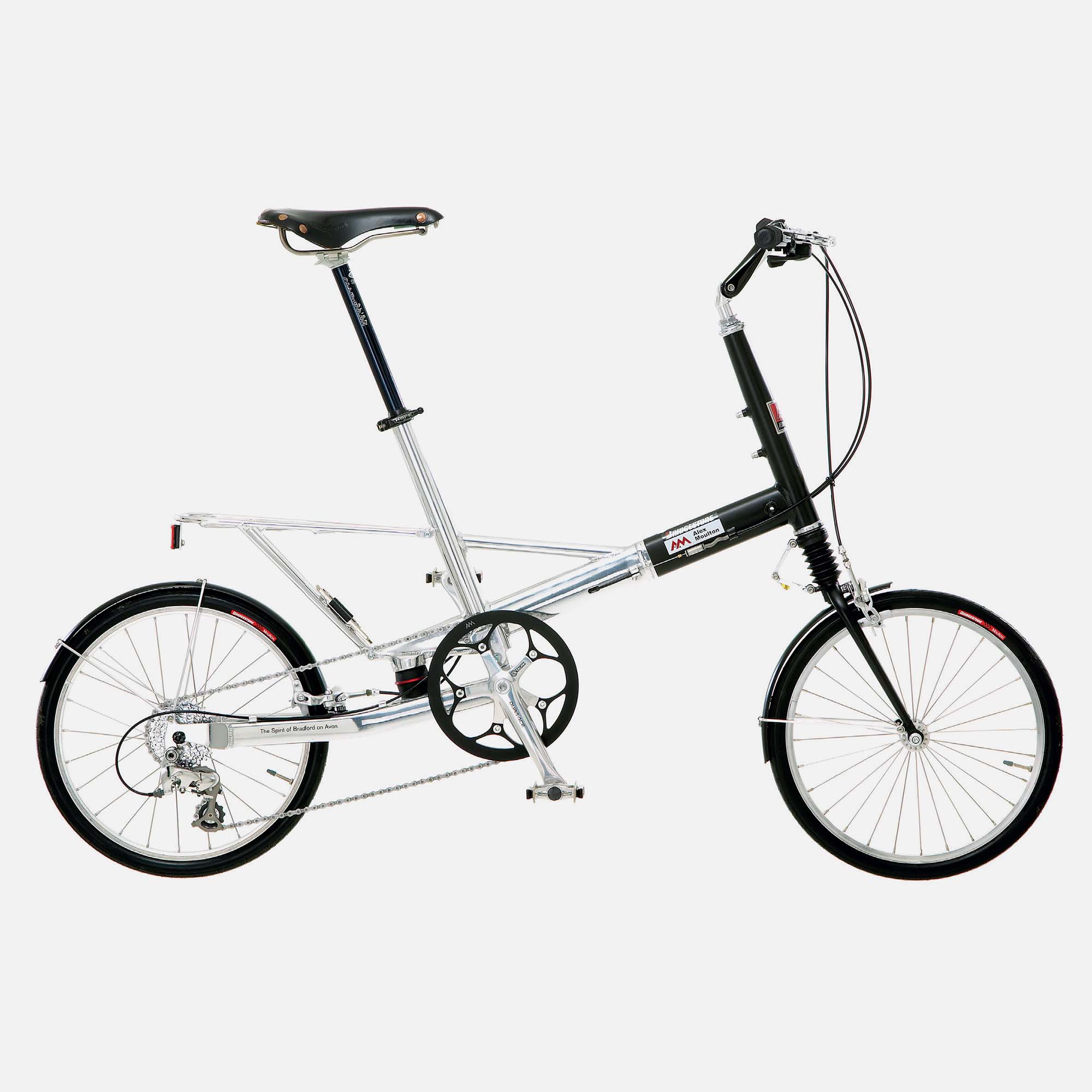
Many Moulton enthusiasts experienced a 'turn of the century' when, in collaboration with Japanese giant Bridgestone, the 'Bridgestone-Moulton' bicycle was introduced in the year 2000. Constructed from aluminium, the model marked a return to the classic 'F' frame design and most closely resembles the original Series One last seen in 1965. Manufactured in the Japan in separable or fixed frame versions, the Bridgestone is the only model built outside of the UK since Raleigh South Africa produced 'F' frame models under licence in the 1960s.